
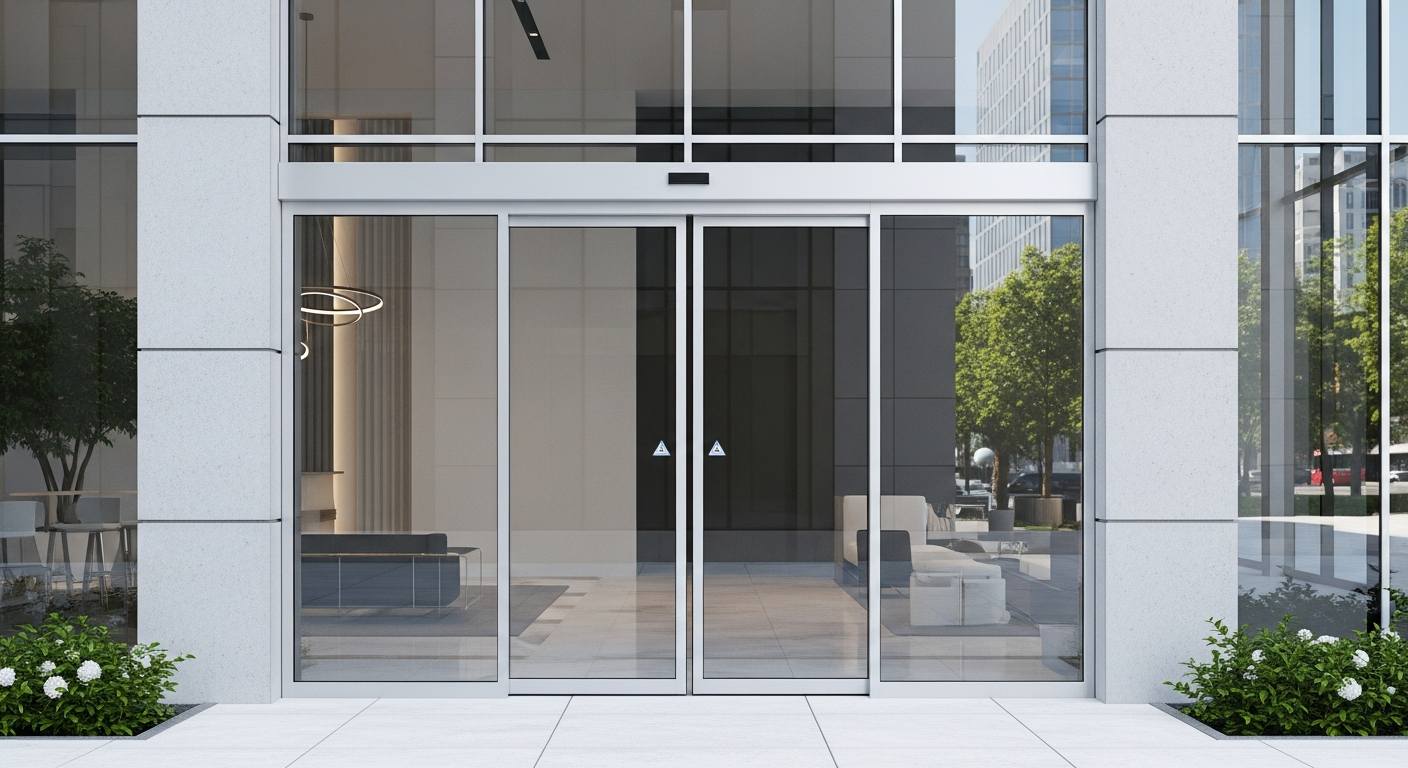

Automatic sliding doors are automated entry systems that utilize electronic sensors and motorized operators to facilitate hands-free pedestrian access. These systems consist of a door leaf, an overhead header housing the motor and drive mechanism, a controller unit that serves as the brain of the system, and a suite of activation and safety sensors designed to detect the approach or presence of pedestrians. Beyond simple convenience, these doors are engineered to manage traffic flow, maintain climate control by minimizing the duration of openings, and provide essential accessibility for individuals with disabilities, all while adhering to rigorous safety standards like ANSI/BHMA A156.10 and A156.19.
The operational sophistication of modern automatic sliding doors has transitioned significantly from the basic weight-sensitive mats utilized in the 1960s to contemporary intelligent systems utilizing 3D cameras, artificial intelligence (AI), and Internet of Things (IoT) connectivity. This evolution addresses multifaceted needs across various sectors, including healthcare, where hygiene and sterile environments are paramount; retail, where customer flow and brand image drive profitability; and high-security facilities, where integrated access control is a necessity. The current market reflects a shift toward total building integration, where the entrance is no longer a static barrier but a data-gathering node within a smart building ecosystem.
The efficacy of an automatic sliding door system is primarily determined by its sensor array and drive mechanism. These components must work in perfect synchronization to ensure that the door opens promptly upon approach and remains open as long as a person is within the threshold, while avoiding false triggers from environmental factors such as wind-blown debris, reflections, or shadows.
The industry distinguishes between motion sensors, which detect movement toward the door, and presence sensors, which detect stationary objects within the door’s path. Microwave sensors are frequently employed for long-range motion detection. These devices emit high-frequency radio waves (typically 24.125 GHz) and measure the reflections, using the Doppler effect to identify moving targets. While highly effective for high-traffic entrances where early activation is required, microwave technology is sometimes susceptible to electrical interference or false positives from motion occurring outside the intended detection zone, such as reflections from polished floors or passing vehicles.
Conversely, Passive Infrared (PIR) sensors detect changes in thermal radiation. They identify the heat signatures of humans or animals against the ambient temperature of the background. This technology is particularly useful for internal or lower-traffic doors where a smaller, more defined detection zone is preferred. Active Infrared (AIR) sensors emit their own infrared beams and detect reflections to determine proximity, making them excellent for presence detection within the threshold to prevent the door from closing on a stationary pedestrian.
Advanced systems now utilize multi-technology sensors that combine microwave motion detection with active infrared presence detection in a single housing. This hybrid approach ensures that the door opens quickly as a person approaches and remains open if they stop to talk or pause in the doorway, providing a higher level of safety than single-technology sensors.
| Sensor Category | Detection Mechanism | Primary Application | Key Advantages | Disadvantages |
| Microwave (Radar) | Doppler shift of 24.125GHz radio waves | High-traffic exterior entrances | Wide detection area; ignores non-moving objects |
Susceptible to EMI and vibration; less effective for slow movers |
| Passive Infrared (PIR) | Detection of body heat radiation | Interior office or low-traffic doors | Low power consumption; precise detection field |
Performance varies with ambient temperature; ignores non-living objects |
| Active Infrared (AIR) | Reflection of emitted IR beams | Threshold safety and presence sensing | Detects stationary objects with high accuracy |
Limited range; can be affected by dark clothing or floor color |
| Pressure Mats | Piezoelectric or mechanical weight sensing | Legacy industrial or niche retrofit | Reliable for detecting weight; simple logic |
High maintenance; aesthetically dated; subject to floor wear |
| Ultrasonic | High-frequency sound wave echoes | Specialized industrial/warehouse | Effective in dusty/poor lighting environments |
Can be affected by high wind or loud noises |
| Laser (LiDAR) | Time-of-flight light pulse mapping | High-security or precision zones | Pinpoint accuracy; multi-zone safety mapping |
High initial cost; requires complex commissioning |
The physical movement of the door leaves is facilitated by an electric motor, typically a brushless DC motor for finer control over speed, torque, and acceleration curves, which drives a belt-and-pulley or screw-driven system. Belt-driven systems are the industry standard for commercial applications due to their quiet operation and smooth motion. Screw-driven systems, while often noisier, offer higher durability for extremely heavy or industrial-grade doors. The control unit manages the acceleration and braking ramps, ensuring that the door does not slam open or shut, which preserves the longevity of the mechanical components and prevents injury.
Modern operators incorporate intelligent microprocessors that can be programmed to adjust opening speeds, closing speeds, and “hold-open” times based on the specific requirements of the facility. These controllers often feature self-diagnostic capabilities, displaying error codes that help technicians quickly identify issues with sensors, motors, or power supplies.
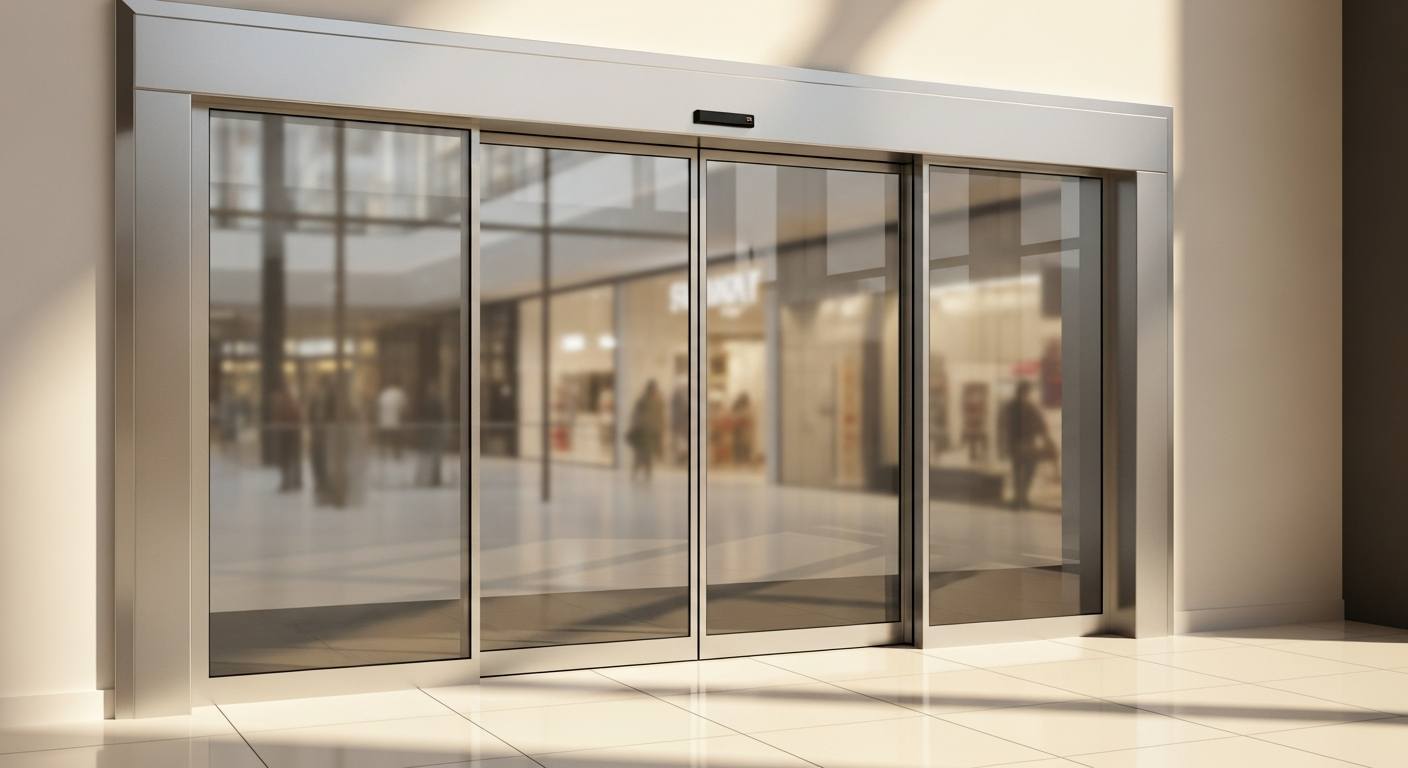
Like any complex electromechanical system, automatic sliding doors require a structured maintenance regime to ensure safety, minimize downtime, and extend their operational lifespan. Neglecting maintenance not only leads to expensive repairs but also increases the legal liability of the property owner in the event of an accident.
Industry experts recommend a tiered approach to maintenance, ranging from daily visual checks to annual professional certifications.
Daily Safety Checks: Property owners are responsible for performing basic tests every morning. This includes walking toward the door from multiple angles to ensure it opens smoothly, standing in the path for 10 seconds to verify that the presence sensors prevent the door from closing, and checking the threshold and tracks for debris or damage.
Weekly/Monthly Cleaning: Dust, cobwebs, or fingerprints on sensor lenses can cause false triggers or prevent detection entirely. Tracks should be vacuumed to remove grit that can wear down rollers and strain the motor.
Semi-Annual Professional Maintenance: A qualified technician should perform deep cleaning, check door alignment, and calibrate sensor zones. Moving parts such as rollers, bearings, and hinges should be lubricated with silicone-based products. Oil-based lubricants must be avoided as they attract dust, creating a grinding paste that accelerates mechanical wear.
Annual AAADM Certification: An annual inspection by a technician certified by the American Association of Automatic Door Manufacturers (AAADM) is essential. This comprehensive review ensures all safety timings, force settings, and signage comply with current ANSI standards.
Understanding the root causes of door malfunctions allows for faster resolution and prevents minor issues from escalating into major operational failures.
The decision to install automatic sliding doors involves a strategic evaluation of the Total Cost of Ownership (TCO) versus the quantifiable benefits in energy savings, labor efficiency, and customer experience.
The cost of a base model automatic sliding door typically ranges from $\$10,000$ to $\$15,000$, with high-end or specialized systems exceeding $\$20,000$ to $\$25,000$. Several variables influence this pricing:
Aperture Size and Weight: Larger openings require heavier glass and more powerful motors, increasing both material and equipment costs.
Material Selection: Frameless all-glass doors offer premium aesthetics but come at a higher price point than standard aluminum-framed models. Stainless steel or bullet-resistant glass can add a significant premium for security-focused installations.
Feature Density: Integrating biometric readers, smartphone controls, or advanced AI-based object differentiation can increase the base price by 25% to 40%.
While the upfront cost is higher than that of manual doors, the ROI is often realized through several channels:
Energy Efficiency: Automatic doors are designed to close promptly, reducing the “air leakage” that accounts for approximately 11% of energy consumption in commercial buildings. Studies indicate that automatic doors can reduce heating and cooling costs by up to 30% compared to manual doors that are frequently left open.
Labor and Throughput: In retail and healthcare settings, the speed of access improves employee productivity. One facility manager reported that employees saved 30% on entry time during peak hours after installing automatic doors.
Asset Protection: Automatic doors prevent the slamming and structural damage common with manual doors in high-traffic areas.
Brand Reputation: A functional, modern entrance creates a positive first impression, which is critical in competitive sectors like retail and hospitality.
| Cost Category | Estimated Range (USD) | Factors Influencing Cost |
| Basic Sliding System | $10,000 – $15,000 |
Standard aluminum frame; standard sensors |
| Premium/Custom System | $20,000+ |
All-glass; telescopic; custom finishes; high-security |
| Installation Labor | $500 – $3,000 |
Site complexity; wiring needs; regional labor rates |
| Annual Maintenance | $200 – $500 |
Traffic volume; number of sensors; age of system |
| Backup Power (UPS) | $500 – $1,500 |
Battery capacity; duration of backup needed |
The automatic sliding door has evolved into a sophisticated architectural element that balances the competing demands of accessibility, safety, energy efficiency, and security. While the mechanical foundations—the motor, the track, and the basic sensor—remain vital, the true innovation lies in the intelligence and connectivity of the modern system.
The industry’s shift toward monitored sensors and predictive maintenance reflects a maturing technology focused on safety and long-term reliability. For property owners and facility managers, the strategic implementation of these systems is no longer a luxury but a fundamental requirement for creating inclusive, hygienic, and energy-efficient environments. As AI and IoT continue to permeate building design, the automatic sliding door will serve as a primary gateway to the truly smart building of the future. The transition from reactive mechanical barriers to proactive, data-driven entry solutions represents the next paradigm in urban and interior mobility.

Comments are off for this post.