
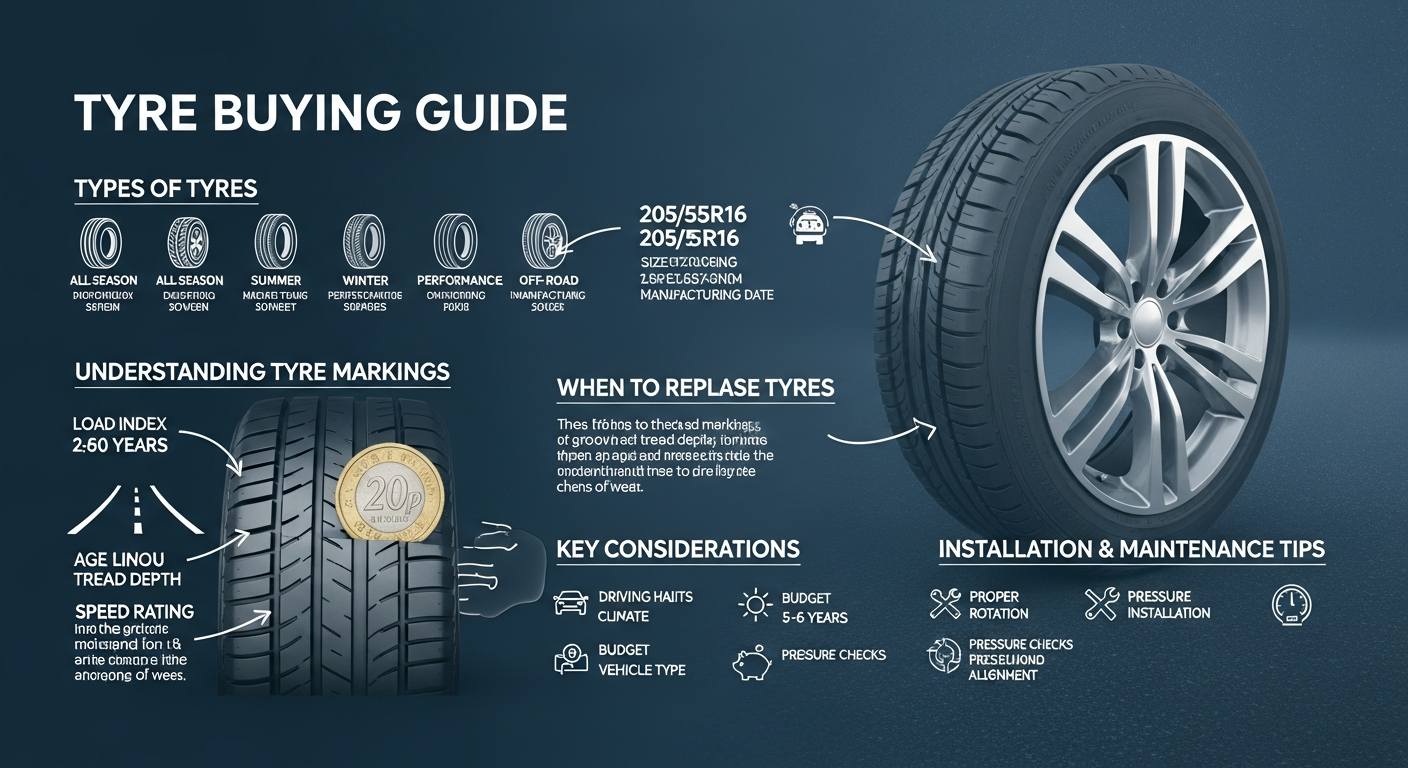

A comprehensive tyre buying guide for drivers in 2026 serves as a critical strategic framework for navigating a market defined by rapid technological shifts, from the specific demands of high-torque electric vehicles to the integration of the Internet of Things into rubber compounds. This guide enables vehicle operators to decode complex sidewall markings, evaluate the long-term economic impact of rolling resistance, and align their procurement decisions with international safety standards such as the UN WP-29 regulations. By understanding the mechanical and chemical interplay between road surfaces and tyre tread, drivers can transition from reactive purchasing to proactive safety and performance management. This analysis provides an exhaustive exploration of the 2026 tire landscape, offering the technical depth required to ensure that every kilometer driven is optimized for safety, efficiency, and sustainability.
The modern automotive consumer has moved beyond simplistic criteria when seeking new tires. In 2026, the primary search intent behind “tyre buying guide for drivers” reflects a need for multi-dimensional data that balances immediate performance with long-term environmental and financial impacts. Drivers no longer search for “cheapest tires” in isolation; instead, they focus on semantic clusters such as “EV range optimization,” “sustainable material certifications,” and “real-time tread wear monitoring”.
This evolution is driven by the increasing complexity of vehicle platforms. The rise of battery-electric vehicles (BEVs) and plug-in hybrids (PHEVs) has introduced specialized requirements for load-bearing capacity and noise reduction. Consumers are increasingly sophisticated, looking for guides that explain why a tire that performed well on a traditional internal combustion engine vehicle might fail prematurely on an electric SUV.
| Search Intent Pillar | Consumer Concern | Technical Requirement |
| Technical Compatibility | Heavier vehicle weight and instant motor torque |
Reinforced sidewalls and high-stiffness rubber compounds |
| Operational Efficiency | Maximizing battery range or fuel economy |
Low rolling resistance () and aerodynamic sidewalls |
| Safety & Compliance | Wet-weather grip and legal tread depths |
Advanced silica-reinforced treads and DOT compliance |
| Tech Integration | Real-time health alerts and predictive maintenance |
Embedded IoT sensors and 5G connectivity |
By 2026, the tire is no longer a “dumb” component. It has become a sophisticated data sensor integrated into the vehicle’s digital architecture.
Modern tires are equipped with embedded sensors that communicate via 5G or Bluetooth to the vehicle’s onboard computer and the driver’s smartphone. These systems monitor not just pressure and temperature, but also tread depth and surface friction. If the tire detects a slippery surface (ice or standing water), it can immediately alert the vehicle’s Advanced Driver Assistance Systems (ADAS) to adjust braking force and traction control.
For fleet operators and individual drivers alike, “Smart Tires” enable predictive maintenance. By analyzing vibration patterns and wear rates, the system can predict exactly when a tire will need replacement or rotation. This reduces the risk of sudden tire failure and optimizes the total cost of ownership by preventing uneven wear caused by poor alignment or improper inflation.
A driver’s location significantly influences their tire selection strategy. The 2026 guide recognizes that extreme heat and poor infrastructure create specific mechanical stresses.
In regions like Pakistan or Thailand, where road temperatures frequently exceed (), tire rubber undergoes accelerated oxidative aging. Heat softens the rubber compound, increasing its malleability but also making it more susceptible to rapid abrasion and internal structural degradation.
For every rise in ambient temperature, tire pressure increases by approximately bar ( PSI). If a tire is already near its maximum pressure, this heat-induced expansion can lead to a reduced contact patch and decreased grip, or in extreme cases, a blowout. Drivers in hot climates must prioritize tires with high “Temperature” ratings (Class A) and check their cold inflation pressure at least once a month.
Poor road surfaces are the primary enemy of tire longevity. A single impact with a sharp-edged pothole can compress the sidewall against the rim, causing internal ply damage. In 2026, many drivers in these regions opt for “All-Terrain” or “Heavy-Duty” passenger tires that feature reinforced sidewalls and “Rim Protectors”—a raised lip of rubber that shields the alloy wheel from curb damage.
Fine dust and sand also play a role, acting as an abrasive between the tire and the road. This is particularly prevalent in urban centers like Karachi or Lahore, where high dust levels can shorten the effective life of a tire by up to 15% compared to cleaner environments.
| Country Focus: Pakistan | Recommended Tire Strategy | Rationale |
| Karachi | Summer Tyres / Performance |
Consistently hot asphalt, minimal rain, high speed highways |
| Lahore/Punjab | All-Season / Mixed |
Intense summer heat () with cold, foggy winters () |
| Islamabad/North | All-Weather / Winter |
Significant elevation changes, icy winters, monsoon rains |
| Rural Regions | All-Terrain / Reinforced |
Unpaved roads, frequent potholes, agricultural debris |
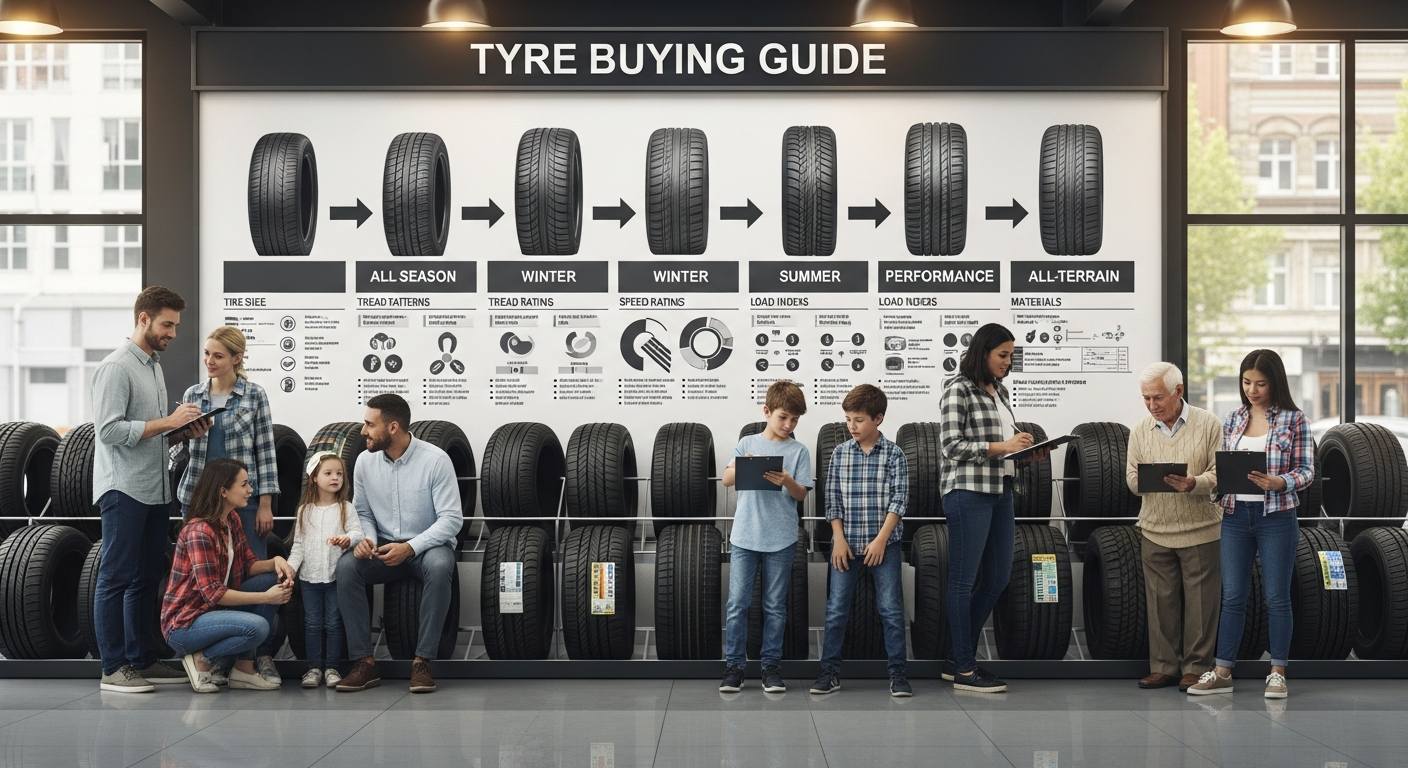
Maintenance in 2026 has evolved from a chore to a data-driven safety protocol. Proper upkeep can extend a tire’s life by to km and improve fuel efficiency by .
While the legal minimum in many countries is nd of an inch ( mm), safety experts in 2026 recommend replacement at nd of an inch ( mm). At nds, a tire’s ability to evacuate water is severely compromised, leading to a high risk of hydroplaning.
The phenomenon of hydroplaning occurs when the water pressure in front of the tire exceeds the vehicle’s weight, causing the tire to lift off the road surface. The speed at which this occurs () is roughly calculated by the formula:
where is the tire pressure in PSI. However, this assumes a full contact patch. As tread depth decreases, drops significantly.
| Tread Depth (32nds) | Condition | Recommendation |
| 10/32″ – 12/32″ | New |
Optimal performance, maximum safety |
| 6/32″ | Worn |
Good for dry roads; caution in snow |
| 4/32″ | Critical |
Significant wet-weather risk; plan replacement |
| 2/32″ | Illegal |
Danger zone; immediate replacement required |
Tires on the drive axle (front for FWD, rear for RWD) wear faster than those on the free-rolling axle. Regular rotation every to km ensures even wear across all four units. Alignment is equally critical; if a vehicle “pulls” to one side, it indicates that the tires are not rolling straight, causing “scuffing” that can destroy a new tire in less than km. In 2026, many tire shops offer free alignment checks with any purchase to ensure the longevity of the product.
The 2026 tire market is rife with sophisticated marketing and outright fraud. Drivers must be vigilant when purchasing online or through unauthorized dealers.
Counterfeit tires that mimic premium brands like Michelin or Bridgestone have become a major concern. These tires often use low-grade rubber that lacks the heat-resisting additives of the original. Even more dangerous is “re-grooving,” where scammers manually cut deeper channels into a bald tire to make it appear new. Drivers can protect themselves by checking the DOT code and ensuring it is embossed (molded) into the rubber rather than stamped on.
Marketing terms like “Eco-Tred” or “Natural-Grip” often have no legal definition and are used to create a “health halo” around inferior products—a practice known as “nutriwashing” or “greenwashing”. Furthermore, “algorithmic pricing” may charge different consumers different prices for the same tire based on their browsing history or location. To avoid these traps, drivers should use the “STOP-CALL-CONFIRM” approach: stop the purchase if a deal seems too good to be true, call a reputable local dealer to verify the price, and confirm the warranty terms before paying.
The 2026 automotive year is the first where many developing nations have fully enforced the United Nations WP-29 safety standards. This framework requires all tires—whether locally manufactured or imported—to meet strict international benchmarks for braking, noise, and environmental impact.
In countries like Pakistan, the Engineering Development Board (EDB) has mandated that all tires must carry pre-shipment inspection certificates from accredited international bodies such as JAAI or KTL. This regulatory shift has effectively banned the import of tires that are older than five years or those that lack verified safety features. For the driver, this means a safer market, though it has resulted in a temporary price increase as manufacturers invest in compliance and certification.
Local manufacturers have been given until June 30, 2026, to achieve full compliance with WP-29 standards. Companies that fail to meet these requirements will have their manufacturing certificates revoked, ensuring that only high-quality, safe tires are available on the market. This global alignment of safety standards is expected to reduce road fatalities significantly and improve the overall standard of transportation infrastructure.
A strategic tyre buying guide for drivers in 2026 concludes that the decision-making process must be a synthesis of technical understanding, climatic awareness, and digital integration. The tire is no longer a peripheral expense but a core component of the vehicle’s safety and efficiency ecosystem.
Drivers who embrace “Smart Tire” technologies and adhere to the rigorous maintenance schedules dictated by modern physics will see substantial returns in vehicle longevity and operational cost savings. Conversely, ignoring the shift toward EV-specific tires or failing to account for heat-induced rubber degradation will lead to increased risk and financial loss.
As the industry moves toward 2030, the standards set in 2026—including bio-based materials, IoT connectivity, and WP-29 safety compliance—will define the global benchmark for what constitutes a “high-quality” tire. By prioritizing these factors, drivers can navigate the road with confidence, knowing their procurement choices are grounded in the highest level of contemporary automotive expertise.


Comments are off for this post.